










History
of the
Leonese Region
1. ANTIQUITY
Before Romanisation, the territory of the Leonese Region was inhabited by four great peoples: the Astures, the Cantabri, the Vettones and the Vaccaei.
Wars over territory were frequent among the peoples who lived in what is now Leonese land, for peoples of Atlantic culture (called Celtic by some) lived there alongside the Vaccaei, who were of a more Mediterranean, Celtiberian stock. Although they were warrior peoples, they also developed culture, the arts, sport and gastronomy.

Collective organisation was tribal, made up of family groups on three levels: the “gentilitates”, the smallest family groups, gathered into “gens”, which together formed a “populus” or people. They were governed by councils of elders who had a say in decisions, from the most important to the details of everyday life, and they practised a collectivist economy based on farming and livestock.
“The most advanced of these neighbouring peoples was that of the so-called Vaccaei: each year they distribute the arable land among the farmers and, pooling its fruits, give each one his share. Farmers who keep any part for themselves are punished with death.”
— Diodorus Siculus
Although the origin of beer is usually attributed to Egypt, the Astures were already making their own beer and wine, as Strabo relates in his chronicles.
“For two thirds of the year the Astures live on holm oak acorns, which they leave to dry, crush and then grind to make a bread that keeps for some time.
They also know beer. Wine they drink only rarely, but what they have they soon consume at feasts with their relatives.
They use butter instead of oil. They eat seated on benches built against the wall, and sit in order of age and rank.”
— Strabo, Greek historian
The Astur-Cantabrian Wars
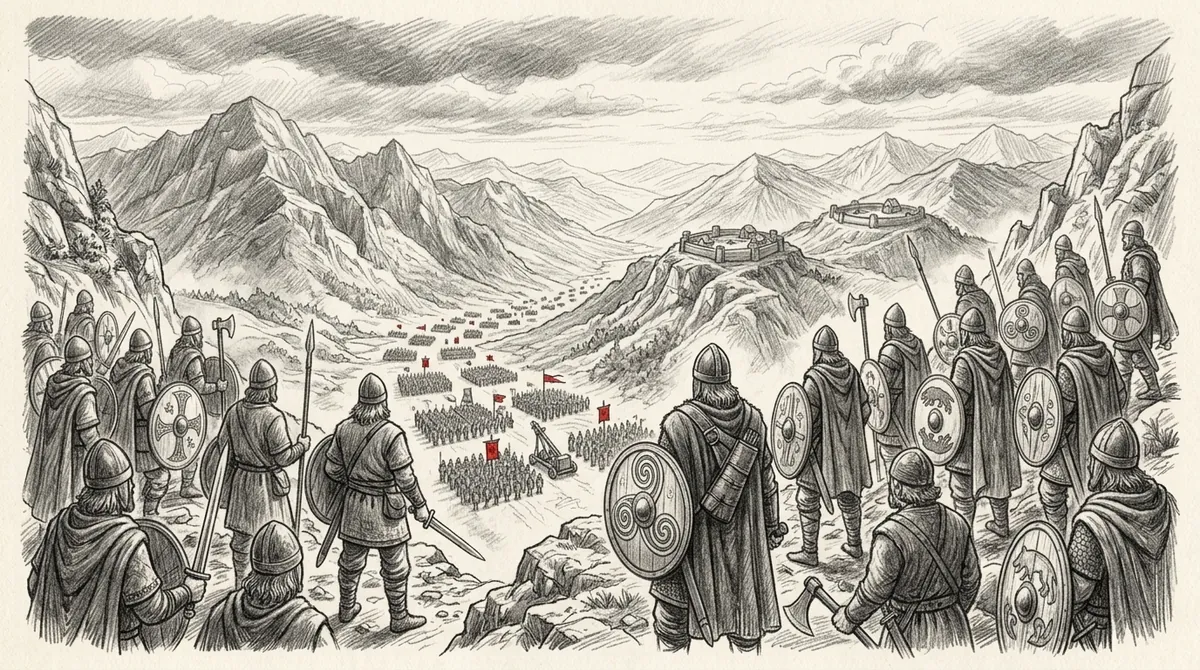
The Roman Empire reached almost every land in the south of ancient Europe; nevertheless, in some areas, such as the Cantabrian Mountains, because of the rugged terrain and the bravery of their people, the Romans had to build and fortify their military bases at certain strategic points in order to create settlements that would last and secure the presence of the Empire in the area.
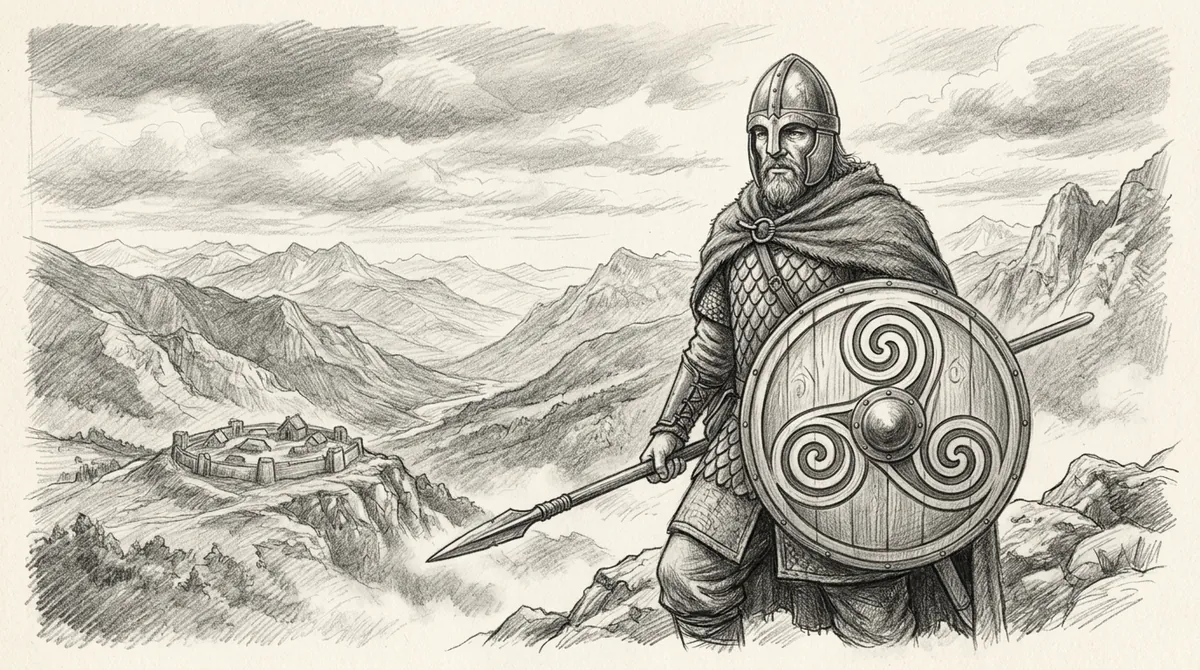
Although the Astures and Cantabri usually avoided head-on clashes and preferred guerrilla warfare against the Romans, they had no choice but to agree a truce among themselves and join forces to face the common enemy at last.
Rome's offensives in this area began with the consul Junius Brutus in 137 BC and would culminate in the campaign led in 26 BC by the emperor Augustus in person.
2. THE ROMAN EMPIRE
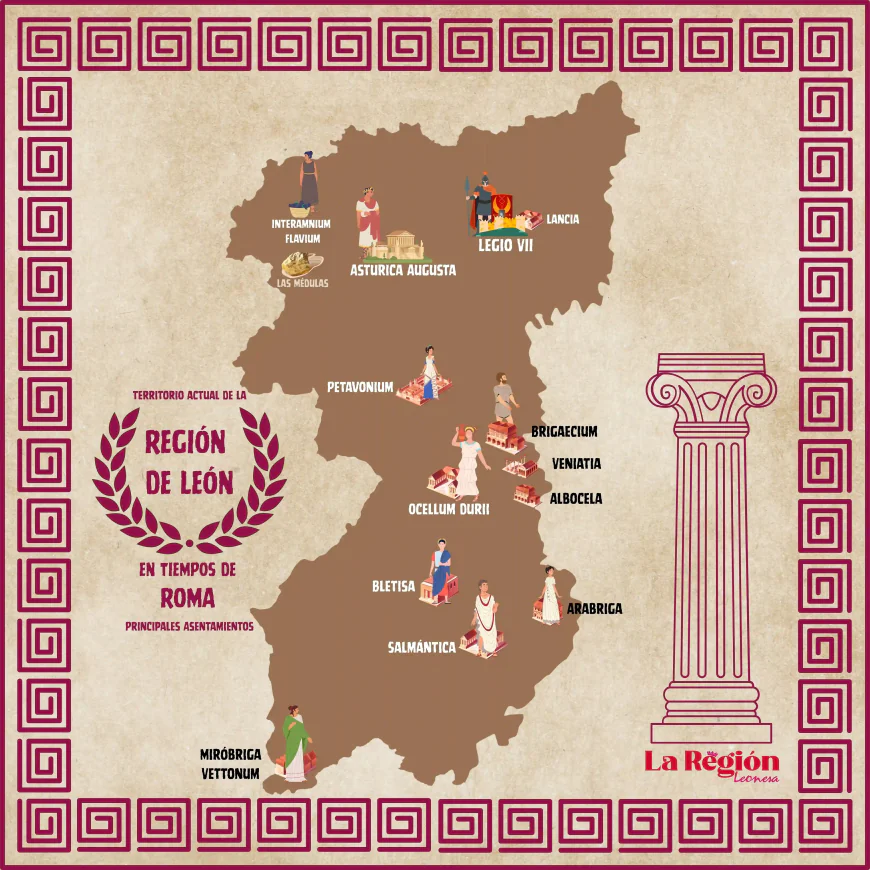
Once the Romans had achieved their aim of bringing the last free peoples of northern Hispania under their yoke, their settlements began to prosper and grow, so that between the 1st and 2nd centuries dozens of new cities were formed for the empire, which turn out to be the forerunners of many of today's Leonese cities.
Leonese Gold
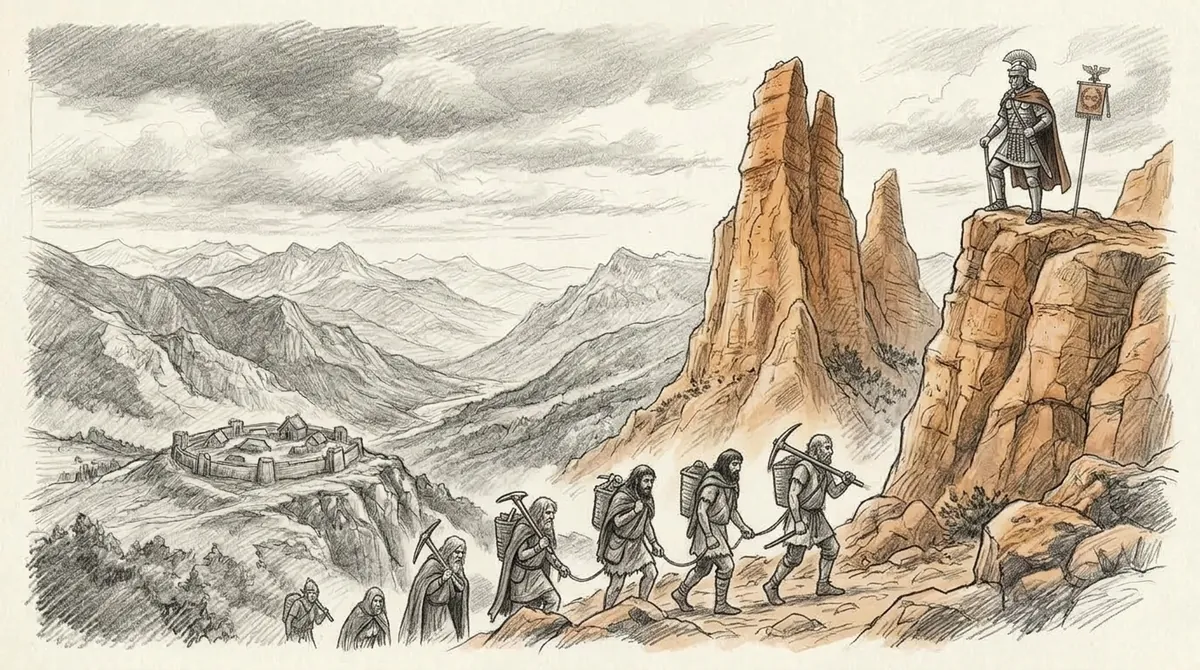
One of the main reasons for the conquest of the north-west of the Iberian Peninsula was to seize and exploit the mines of gold and other metals, which were abundant in this area, especially in the Cantabrian Mountains and in the district of El Bierzo, where the famous Roman gold mines of Las Médulas can still be visited today, and the complex system of extraction and use mastered by the Romans can be seen on the spot.
The Vía de la Plata

After the legionaries of the Astur-Cantabrian wars were discharged, a Roman road was built in present-day Mérida that came to be known as the Vía de la Plata. It linked the strategic cities of Augusta Emerita (Mérida) and Asturica Augusta (Astorga), and so became the main economic corridor of the west of the Roman Empire.
Roman Integration
Once the Iberian peoples had finally been subdued, the Roman camps (formerly purely military places) grew and gradually turned into prosperous cities. For example, the settlement of the Legio VII Gemina gave rise to the later city of León and its “cannaba” of Ad Legionem, and that of the Legio X Gemina to the city of Astorga.
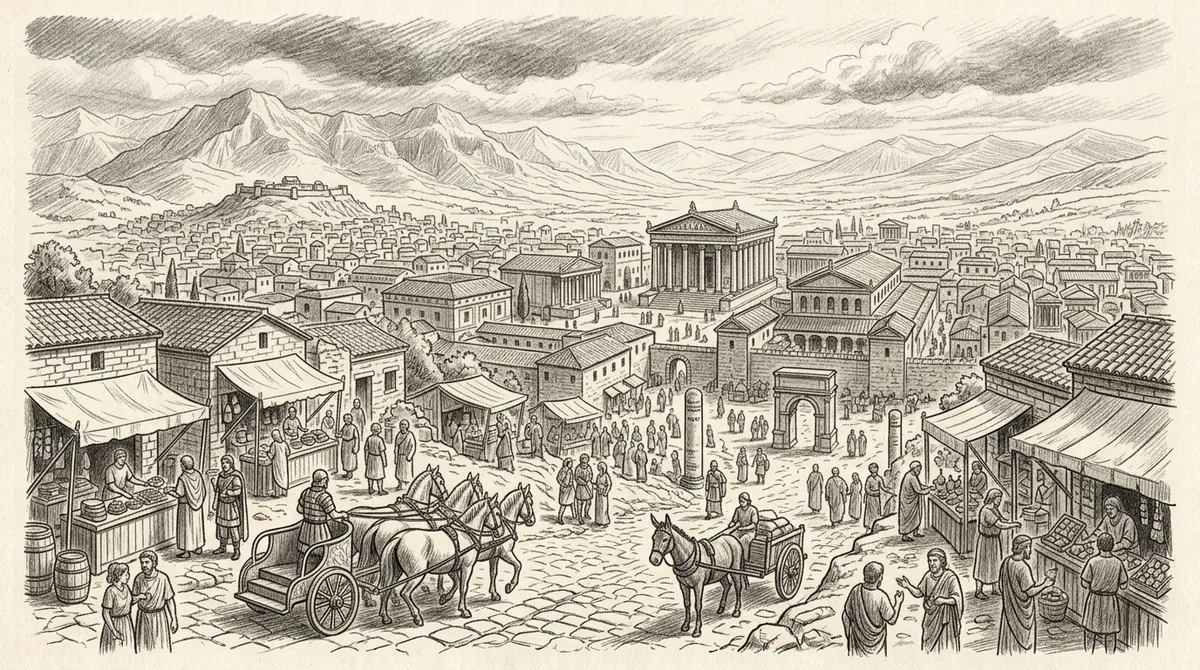
The Roman imprint is still present today in every corner of Leonese territory. A good number of constructions from the period still blend into the urban landscape: Roman bridges, arches, roads, walls, irrigation channels… which continue to defy the passage of time throughout the Leonese Region.
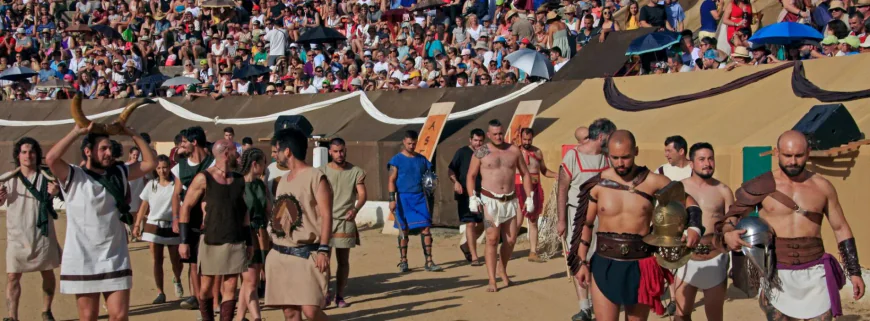
3. Suebi and Visigoths
After hundreds of years of Roman rule in the area, the empire weakens until it disappears from the Iberian Peninsula, and Germanic peoples from the north arrive to settle in the future Leonese lands.

First the Suebi, and then the Visigoths, settled in the area and brought their culture to it, although it was the latter who managed to take control of almost the whole Iberian Peninsula after the Suebic defeat of 575. Their traces can be seen in the church of San Pedro de la Nave, in the province of Zamora, considered one of the best preserved of its time.

At the battle of Guadalete, from 19 to 26 July 711, which settled the civil war among the Visigoths over the royal succession, Roderic, one of the candidates, dies. Achila II will have a brief reign and, together with his Muslim allies, they will gradually take control of the Iberian Peninsula until the process is completed in 714.
4. Asturum Regnum
In the year 718, a Gothic nobleman who refused to submit to the Caliph of Damascus lit the spark of what would later become the Kingdom of the Astures, or Asturum Regnum. For the first time, the tribes of the north of the peninsula (Luggones, Zoelae, Paesici, Amaci, Lancienses and others) united under a single sceptre, giving shape to an organised resistance that would mark the beginning of a new historical era. That alliance was the seed of the future Kingdom of León.
The Reconquista
In the 8th century, Pelayo, who until then had been a well-known Astur aristocrat and military man, son of the Visigothic duke Favila, begins a process of expansion against the caliphate that has come to be known, in legendary fashion, as the “Reconquista”.
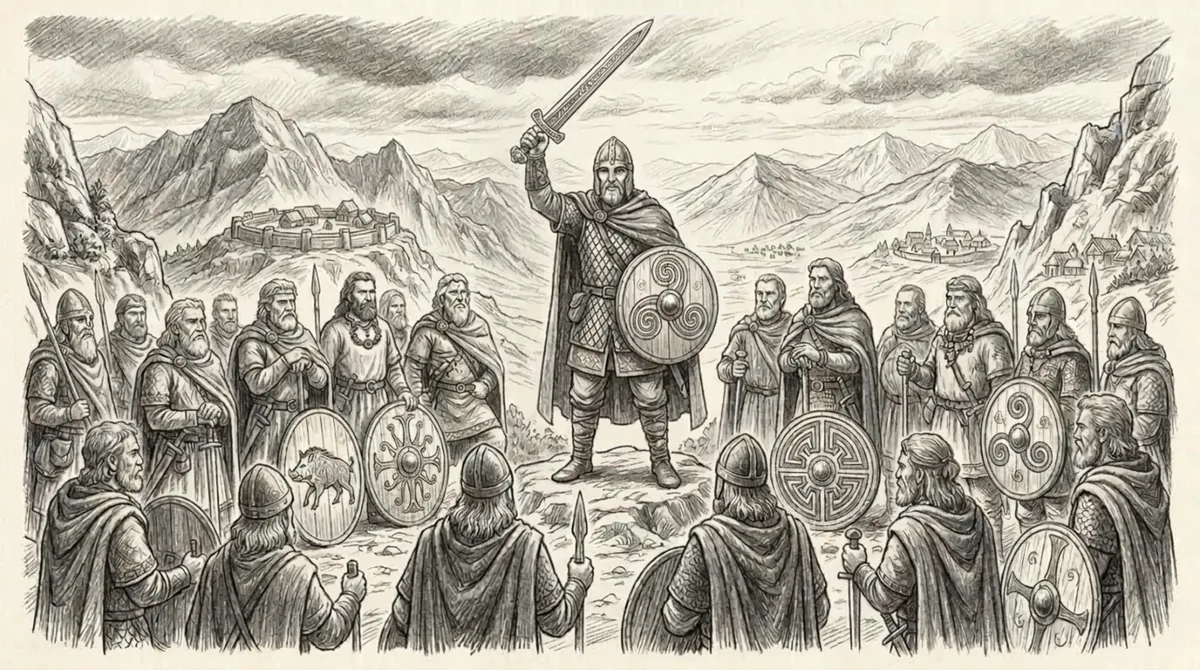
In its beginnings, the territory of the Asturum Regnum was limited to the Cantabrian north and the adjacent districts. When the emir of Córdoba abandons the territories north of the Andalusi March to turn them into tributaries of the empire, the Astur kings began their territorial expansion, which by the end of the 9th century had settled on the river Duero. To the south there remained a strip of territory with no clear organisation as far as the Andalusi March, which was tributary at times to the Caliph of Baghdad and at others to the king of Oviedo.
5. The Birth of the Kingdom of León
It was the year 910 when the Astur king Alfonso III died, bringing about the royal succession and dividing his territory into three kingdoms for his three sons: Galicia, León and Oviedo.

García, the pre-eminent brother, established his palaces in Legio (the city of León). It had been walled by a Roman legion, its lands were flat and fertile, and it enjoyed an excellent strategic position. García thus became the first King of León, sovereign of the Regnum Legionense, as the kingdom was called at the time.
On his death, Ordoño, king of Galicia and until then subordinate to his brother, takes the crown of both kingdoms and also establishes his seat in Legio.

Finally, on the death of Ordoño, his brother Fruela, subordinate to Ordoño but king of Oviedo, inherits the crown and once again brings together the territory of Gallaecia (Galicia), Orvetum (Oviedo) and Legio (León) under the same sceptre in the year 925. León would remain established as the royal seat for 320 years.

6. Territorial Expansion
The southward advance of the Leonese Crown was variable, discontinuous and complicated. Periods of conquest alternated with others in which borders were consolidated or even pushed back.
In the turbulent second half of the 10th century, León was tributary to the Caliph of Córdoba, and as many as four claimants to the throne proclaimed themselves kings of Galicia. However, the 11th century stabilises the situation, as the Caliphate of Córdoba breaks up into the taifa kingdoms and the dominions of the Leonese Crown extend as far as present-day La Rioja.
In 1296, Juan I proclaims himself King of León, Seville and Galicia, a reign that will end in 1301. In spite of everything, the Kingdom of León continues to convene its own separate Cortes until 1348. It will also retain its institutional identity through its royal adelantados and merinos.

Did you know? The influence of the Kingdom of León on the history of Spain is striking. A study by the universities of Oxford and Santiago detects in 48% of the DNA of the Spanish traits from a specific time and place: the Kingdom of León and the expansion of its inhabitants after the Reconquista.
The Splendour of the Kingdom of León
Dozens of castles, palaces, towers and other heritage features from those centuries still stand in Leonese towns and landscapes, making up the typical tourist postcard of the old Kingdom. Their centuries-old stones are an indelible reminder of an age of splendour that lives on in the landscape and in memory.

7. The Spains
From 1492 onwards, the borders of the kingdoms and their provinces began to change constantly, driven by the marriage of two of the most powerful monarchs of the Iberian Peninsula: Isabella of Castile and of León, and Ferdinand, king of the Crown of Aragon.
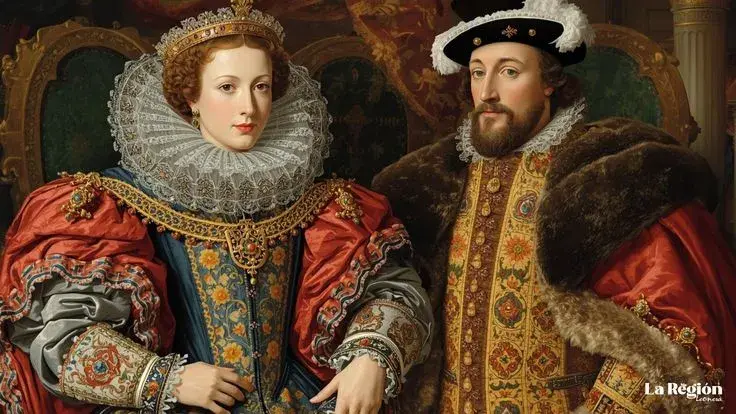
Despite this political transformation, the Kingdom of León kept its status and independence, as did the other kingdoms that made it up, such as those of Toledo, Galicia, Seville or Murcia.
The 50 Provinces
Around the year 1590, the provinces within the various kingdoms that would make up Spain went from 21 to 50, in a process of territorial reorganisation. In the Leonese dominions of the time, notable curiosities include the enormous extent of the province of Salamanca, the existence of the province of Toro (which has since disappeared), and the scattering of certain Leonese territories among other provinces.
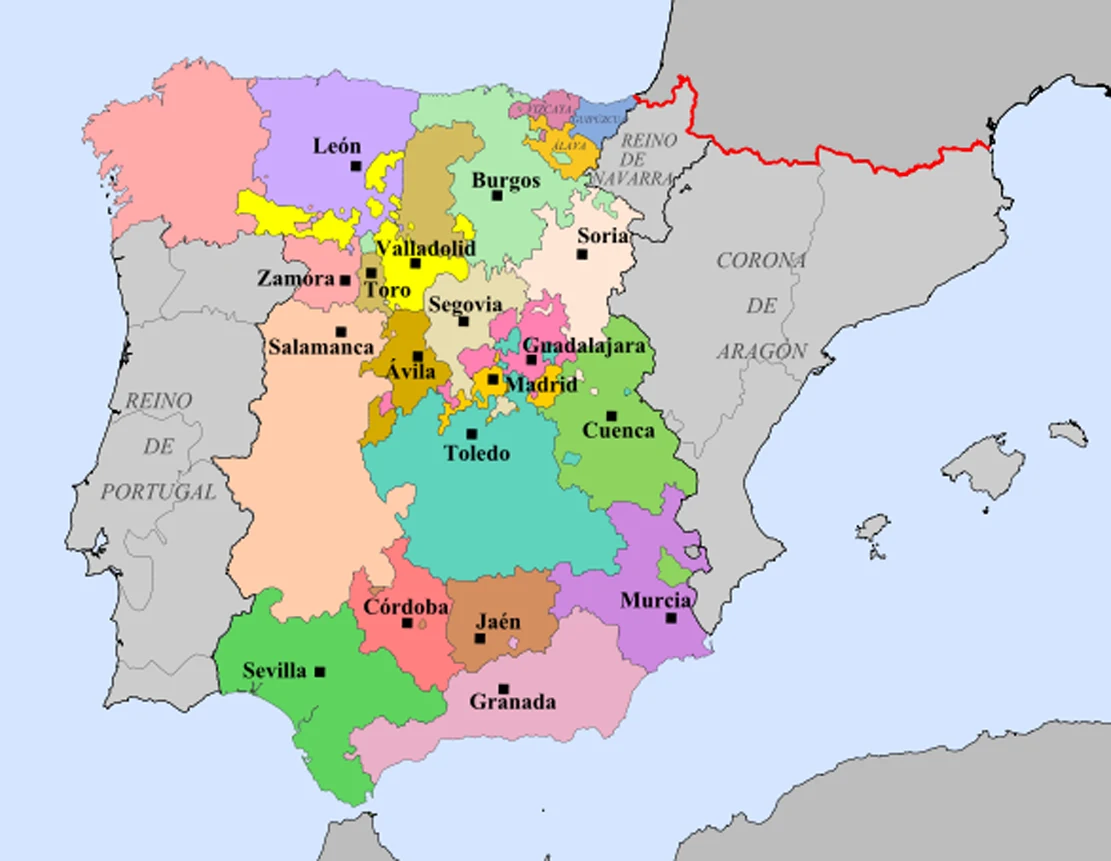
In any case, these “provinces” were at that time mainly fiscal and jurisdictional in nature, very different from the administrative concept we understand today.
In this period the Kingdom of Galicia had no vote in the Cortes, and it was the Leonese province of Zamora that decided on its behalf. In 1623 the Galician diplomats manage to “convince” Philip IV and obtain the right to vote for Galicia, on payment of 10,000 ducats.
The Leonese Decline
In the centuries that followed, the Kingdom of León would enter a gradual economic decline that moved it further and further from the main centres of power in the peninsula. The loss of political influence, the shift of decision-making towards other regions and the weakening of its institutional structures would mark a period of decline compared with the splendour of earlier times. Even so, its historical and cultural legacy would live on in its people.

The Napoleonic Wars
The Napoleonic Wars had an especially significant impact on the Kingdom of León. The French armies, in their advance towards Portugal, conquered everything in their path, and León became an unavoidable stop on their route.

Important engagements were fought on Leonese soil, such as the Carrera de Benavente (Battle of Benavente), the battle of Cogorderos, the battle of Cacabelos and the sieges of Astorga, which left a deep mark on the historical memory of the region. These episodes reflect Leonese resistance in one of the most turbulent periods of Spain's modern history.
Did you know? French troops destroyed part of León's heritage during their occupation. An especially painful example was the use of the Royal Pantheon as a temporary stable: the soldiers emptied out the bones of several Leonese kings and used their sarcophagi as drinking troughs for the horses. This act, besides being sacrilegious, symbolised deep contempt for the historical memory of León and the legacy of its medieval monarchy.
The Birth of Spain
In the midst of the Peninsular War (known in Spain as the War of Independence), the first attempt to create a modern state in the Iberian Peninsula takes place, culminating in 1812 with the signing of the Constitution of Cádiz. According to experts, this milestone marks the birth of Spain as a sovereign nation and the dissolution of the old historical kingdoms, such as the Kingdom of León.
From its creation by King García I in the year 910 to the promulgation of the Constitution of Cádiz in 1812, the Kingdom of León adds up to 902 years of official history as a recognised kingdom. Not bad at all if we compare it, for example, with the 722 years of the Kingdom of England.
8. The Present Day
The dark period in Leonese lands began with the emigration of its population to more industrialised cities in the 20th century, and has continued with negative demographic and economic figures down to the present day. Several factors explain this situation: cultural, social and political causes have contributed to the gradual depopulation, the loss of institutional weight and the economic weakening of the region. In spite of this, the Leonese Region preserves a valuable historical and cultural heritage that remains a source of identity and pride for its people.
The Autonomous Communities
Following the signing of the Spanish Constitution of 1978, various statutes of autonomy were created across the country. In principle the process seemed simple, since it could be based on the regions that already existed or on the historical nationalities, as the Constitution itself sets out in two of its articles.
The 1978 Constitution guarantees and recognises the right to autonomy of the nationalities and regions that make up Spain, thus laying the foundations for the present decentralised territorial model. This legal framework allowed each autonomous community to define its powers, institutions and forms of self-government.
Why was León stripped of its autonomy?

In 1979, the politicians decided, without consulting the citizens, to join the Leonese and Castilian territories under a single autonomous government, giving rise to the present autonomous community of Castilla y León, which marked the last time the Kingdom of León had borders of its own. (READ MORE)
Despite dozens of demonstrations against it, with thousands of citizens mobilised in the three Leonese provinces (León, Zamora and Salamanca), the process went ahead, driven by personal political interests. It is believed that the limited economic weight of both regions at the time played a decisive part in the creation of this autonomous model, regarded by many as an administrative “monstrosity”.
The autonomous community acknowledges in its statutes that it is made up of two historical regions: León and Castile. However, this mention has no real political reflection, which for decades has fuelled the debate about the identity, representation and institutional recognition of the old Kingdom of León.